How do you identify businesses that genuinely need clean-room systems in 2026? Start with the process, not the industry label. A semiconductor line handling exposed wafers has different contamination risks from a packaging area that stores sealed components. A sterile medicine-filling suite, a diagnostic testing laboratory, and an aerospace optics workshop may all need controlled environments, but for different reasons. Look for exposed products, sensitive materials, precise assembly, or testing where airborne particles, temperature, humidity, or microbes can affect performance. Small details matter. A door opening beside an exposed workbench can undermine careful environmental control.
Searches for “what industries require clean room systems” often produce broad lists. Treat them as leads, not proof. Common candidates include pharmaceuticals and biotechnology, medical-device manufacturing, semiconductor and electronics production, specialized food and beverage operations, and research laboratories. Yet not every department in these sectors needs a clean room. Some need localized clean zones; others need controlled temperature or pressure rather than a fully classified suite. That distinction changes project costs. That shortcut can mislead.
For a credible 2026 assessment, map each production step, identify contamination sources, and review product specifications with qualified facility and quality professionals. Ask about cleanliness class, filtration, pressure relationships, cleaning routines, monitoring, and future expansion. Compare the cost of environmental control with the cost of scrap, failed testing, or inconsistent results. Be cautious with generic industry rankings. They may overlook smaller, specialized operations—or overstate demand. Real facilities rarely fit a neat list. The key question is not only who needs a clean room, but which process needs what level of control.
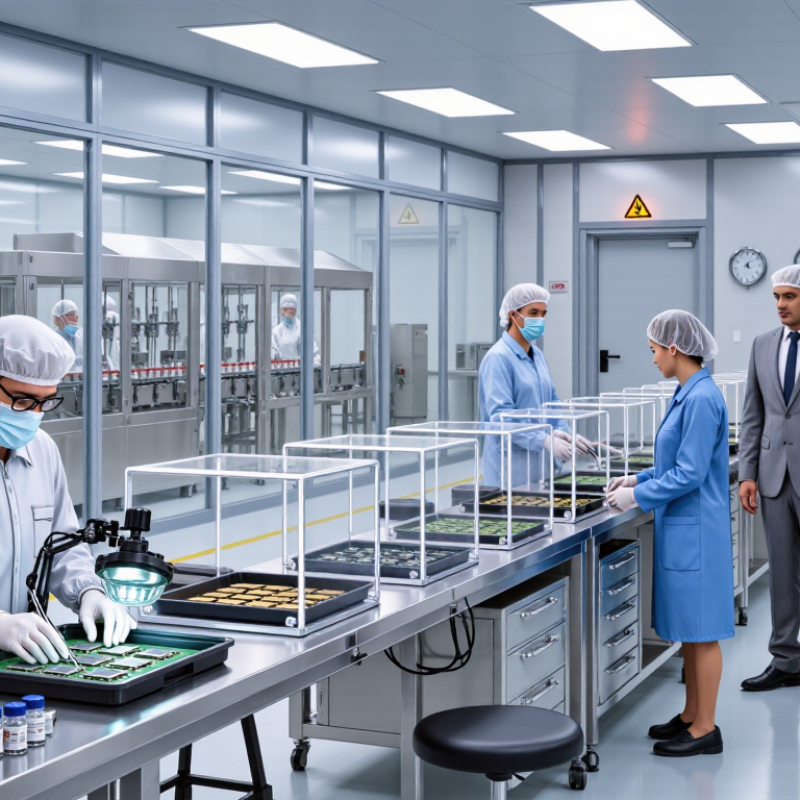
A cleanroom is a controlled space where airborne particles and other contamination risks are kept within defined limits. It is not simply a spotless room. Air filtration, room pressure, humidity, cleaning practices, and staff clothing all help protect sensitive work. The need becomes clear when tiny contaminants can reduce product yield, compromise sterility, or affect performance. Semiconductor fabrication, sterile medicine production, medical-device assembly, and precision optics are common examples. The exact controls depend on the process.
ISO 14644-1:2015 classifies cleanrooms by airborne particle concentration. At the 0.5-micrometer threshold, ISO Class 5 allows up to 3,520 particles per cubic meter; ISO Class 7 allows up to 352,000. That gap matters. The FDA’s 2004 aseptic-processing guidance identifies ISO Class 5 conditions for critical operations, with ISO Class 7 or 8 environments used for supporting areas. These benchmarks help teams match room controls to risk, rather than specifying the strictest class everywhere. A practical assessment should examine exposed materials, open-product steps, people and equipment movement, and how contamination is monitored. A common misstep is treating classification as proof of control. It isn’t. Real performance depends on daily procedures, maintenance, and whether monitoring reflects the actual work.
A useful search starts with the product, not the industry label. Semiconductor fabrication is an obvious candidate because tiny airborne particles can damage wafer features. The Semiconductor Industry Association reported global chip sales of $627.6 billion in 2024. That scale makes process protection commercially significant, though sales alone do not prove that every facility needs a cleanroom. The key signal is a production step where dust, humidity, or static can spoil a batch.
Pharmaceutical production, medical-device assembly, diagnostics, and selected food operations also deserve closer review. Sterile filling, exposed components, and contamination-sensitive packaging often require controlled environments. The World Health Organization estimates that contaminated food causes 600 million illnesses and 420,000 deaths worldwide each year. This is a food-safety measure, not a cleanroom demand figure. Still, it shows why firms handling ready-to-eat or sensitive products may assess airborne and surface controls carefully. Not every food plant needs a cleanroom. Look at the process. A practical screen asks whether products remain exposed, whether defects are hard to detect, and how costly a rejected batch would be. Facility walkthroughs can reveal overlooked risks, such as open transfer points or powder settling near packaging lines. Those details matter more than a broad industry label.
Identify industries that handle sensitive products or processes, then assess the cleanliness level required for the specific operation.
How to read the chart: Lower particle limits indicate cleaner environments. Cleanrooms are commonly used in semiconductor manufacturing, sterile pharmaceutical filling, medical-device assembly, biotechnology and cell processing, and aerospace optics. Required conditions vary by product, process, and applicable regulations; an industry does not have one universal ISO class.
Maximum concentration of airborne particles ≥0.5 μm, in particles per cubic metre. Limits shown are from ISO 14644-1:2015.
Compare cleanroom needs by contamination risk, not factory size alone. SEMI’s World Fab Forecast projected global semiconductor fab capacity growth of 6% in 2024 and 7% in 2025. More wafer output means more controlled space for lithography, inspection, and handling. Tiny particles can spoil patterned wafers. Still, not every production zone needs the same classification; process steps and product tolerances should set the design.
Pharmaceutical manufacturing has a different pressure point: sterile products. The World Health Organization’s Global Vaccine Market Report 2022 recorded 16 billion vaccine doses distributed in 2021, compared with 5.8 billion in 2019. That jump highlights the scale of sterile production, though dose volume alone cannot determine room size. EU GMP Annex 1 emphasizes contamination control and graded cleanroom environments. A practical assessment should map each open-product step, gowning route, and material transfer before specifying grades.
Battery plants need another comparison. The International Energy Agency’s Global EV Outlook 2024 estimated 2023 global battery-cell manufacturing capacity at about 2.2 terawatt-hours, roughly three times electric-vehicle battery demand. Yet electrode production often depends more on very low humidity than on conventional particle classification. Not every cleanroom. In some facilities, dry-room performance drives energy use and layout more than airborne particle limits. That distinction is easy to miss when sectors are compared only by floor area.
| Industry sector | Common cleanroom applications | Primary contamination concerns | Typical cleanliness approach | Cleanroom need in 2026 | What to assess when identifying demand |
|---|---|---|---|---|---|
| Semiconductors and microelectronics | Wafer fabrication, photolithography, advanced packaging, and precision assembly | Airborne particles, molecular contamination, electrostatic discharge, and temperature or humidity variation | Very stringent particle control; ISO 14644-1 cleanroom classes are selected according to the process and production area | Very high — critical for fabrication and other particle-sensitive processes | Look for wafer or advanced-packaging production, process expansion, yield-control initiatives, and requirements for vibration, humidity, and ESD management. |
| Pharmaceutical manufacturing | Sterile drug production, aseptic filling, compounding, and sterile packaging | Microorganisms, particles, cross-contamination, and loss of environmental control | Risk-based cleanroom zoning under applicable GMP requirements; EU GMP Annex 1 uses Grades A–D for sterile manufacture. These grades are not direct equivalents of ISO classes. | Very high — especially where sterile or aseptic products are made | Check whether products or steps require sterile processing, the applicable regulatory framework, facility qualification needs, and planned capacity increases. |
| Biotechnology and biologics | Cell culture, biologics processing, vaccine production, and aseptic filling | Microbial contamination, product cross-contamination, particles, and environmental excursions | Facility zoning and environmental controls based on product, process, and regulatory risk; sterile steps may require higher-grade controlled areas | High — strongest for sterile processing and contamination-sensitive production | Identify aseptic operations, open processing steps, containment requirements, product changeover patterns, and the need to separate personnel and material flows. |
| Medical devices | Manufacture and packaging of sterile devices, implants, and sensitive diagnostic components | Particles, bioburden, residues, and contamination during assembly or packaging | Controlled environments are chosen according to device risk and process needs; ISO 14644 classifications may be used where appropriate | High — varies with device type and whether sterile processing is involved | Check sterility claims, assembly sensitivity, packaging method, cleaning validation needs, and applicable quality-system and regulatory requirements. |
| Aerospace and precision engineering | Optical payload assembly, satellite components, sensors, and precision instrument integration | Particles, fibers, outgassing residues, static, and contamination of optical or electronic surfaces | Process-specific controlled areas, often with particle, material-handling, and cleanliness controls tailored to the component | Moderate to high — concentrated in high-value, contamination-sensitive assembly | Look for optics, spacecraft, sensor, or precision-electronics work; assess cleanliness specifications, handling protocols, and component protection needs. |
| Optics and photonics | Lens and mirror fabrication, laser components, optical coatings, and photonic device assembly | Dust, fingerprints, films, particles, and contamination that can affect optical performance | Clean assembly or coating areas with controls matched to surface sensitivity; formal ISO classification depends on the process | Moderate to high — driven by precision finishing and sensitive optical surfaces | Assess surface-cleanliness specifications, coating processes, inspection requirements, product tolerances, and the frequency of contamination-related rework. |
| Food and beverage | Hygienic production, high-care processing, and controlled packaging of selected products | Pathogens, allergens, product-to-product contamination, and environmental hygiene risks | Typically uses hygienic zoning, sanitation, and food-safety controls rather than an ISO-classified cleanroom; specialist controlled environments may be used for particular processes | Selective — demand depends on product risk and process design, not simply on production volume | Review high-care or high-risk operations, ready-to-eat products, allergen segregation, environmental monitoring, and whether hygienic zoning meets the actual hazard controls. |
| Hospitals and clinical compounding | Sterile compounding, selected laboratory work, and controlled preparation of medicines | Microbial contamination, particles, and risks to patients or prepared products | Requirements depend on the activity and local regulations; sterile compounding commonly uses controlled environments and qualified engineering controls | Selective to high — concentrated in facilities performing sterile preparation or specialized laboratory work | Confirm the services performed, applicable national and local standards, room classification requirements, and the need for certification and ongoing monitoring. |
Note: Need levels are qualitative comparisons, not market-size estimates. ISO 14644-1 classifies airborne particle cleanliness; it does not by itself define microbiological or product-specific requirements. Applicable regulations, process risk, and facility design determine the required controls.
To find industries that need clean rooms in 2026, start with applicable regulations and product requirements. Rules differ by country, process, and product, so confirm current guidance with qualified compliance specialists. Pharmaceutical production, medical-device assembly, semiconductor fabrication, and some aerospace work may require controlled environments. Not every facility needs the same cleanliness level. Check whether regulations or customer specifications set limits for airborne particles, temperature, humidity, or microbial contamination.
Then assess contamination risks on the factory floor. Watch for exposed materials, open product handling, powder residue, and frequent movement between work areas. A door opening beside a sensitive assembly bench can matter more than a polished lobby. Review inspection records, process maps, and any available particle-monitoring data. Consider where contamination could enter, how it could spread, and what a failure would affect. The boundary can be fuzzy.
Facility trends can reveal demand, too. New production lines, renovated laboratories, and shifts toward smaller, more precise components may prompt clean-room upgrades. Look for plans that include controlled ventilation, suitable utilities, gowning areas, and space for equipment maintenance. A modular room may fit a phased expansion, but it still needs a workflow that prevents avoidable contamination. Do not assume a trend proves demand; verify budgets, project timelines, and technical requirements with facility teams.
In 2026, semiconductor manufacturing is likely to lead clean room demand. Tiny particles can damage wafers, so production depends on tightly controlled air, temperature, and humidity. Pharmaceuticals and biotechnology rank next, especially sterile drug production and cell research. Medical device makers also need controlled spaces for products such as implants and diagnostic equipment. Demand is rising. Precision optics and aerospace manufacturing follow, where dust can affect lenses, sensors, and sensitive components. This ranking reflects contamination risk and production needs, not a guarantee of spending.
Tips: Look for products with strict particle limits, sterile processes, or high scrap costs. Check job listings and facility expansion plans for signs of investment. Ask what cleanliness level each process needs before comparing suppliers.
Food production and advanced electronics packaging may also need clean environments, but requirements vary widely by product and process. A company may need one controlled room, not an entire clean-room facility. That distinction matters. Rankings can shift as technologies, product mixes, and investment plans change. Treat them as a starting point, then verify demand through facility projects and technical requirements.
It is a controlled space that limits airborne particles and other contamination. A spotless floor is not enough.
Consider one when dust, humidity, or microbes could spoil exposed products or reduce yield. Assess the actual process, not its industry label.
Semiconductor production, sterile medicine, medical-device assembly, diagnostics, and precision optics may need them. Some food operations may, too.
No. Check for exposed ready-to-eat products, open packaging, and sensitive production steps. The whole facility may not need equal controls.
Particle limits vary by class. At 0.5 micrometers, Class 5 allows up to 3,520 particles per cubic meter. Class 7 allows 352,000. A wide gap.
Filtration, room pressure, humidity, cleaning, staff clothing, and equipment movement all matter. Small habits count.
No. A room may meet its stated class but still fall short during daily work. Maintenance and monitoring matter.
Check open transfer points, powder near packaging lines, exposed materials, and crowded equipment routes. Easy to miss something.
Clean rooms are controlled environments designed to limit airborne particles, microbes, and other contaminants that could affect products, processes, or research. To determine what industries require clean room systems, start by identifying work involving sensitive materials, precise manufacturing, sterile conditions, or strict contamination control. The level of cleanliness needed varies according to the product and the risks involved.
In 2026, industries such as pharmaceuticals, biotechnology, medical device manufacturing, semiconductor production, aerospace, and food processing may rely on clean rooms for different reasons. Comparing their needs means considering product sensitivity, process requirements, contamination risks, applicable standards, and facility trends such as automation and expanded production capacity. These factors help distinguish industries with occasional clean room use from those with sustained, high demand, providing a practical basis for prioritizing investment and facility planning.

Goldy Homes