How to maintain air quality in clean room facilities is not a question answered by filters alone. It requires disciplined design, daily behavior, and measurable control. Dr. Tim Sandle, a pharmaceutical microbiologist and cleanroom author, explains, “A cleanroom is not a sterile environment; it is a controlled environment.” That distinction matters. Even a bright, spotless room can contain invisible particles, microbes, or chemical vapors.
Reliable control begins with airflow. HEPA filters should be properly rated, installed, and tested for leaks. Supply air must move consistently across critical work areas. Pressure differentials should protect higher-grade rooms from surrounding contamination. Technicians should record pressure, temperature, humidity, and particle counts. Small changes can reveal a failing filter or poorly sealed door. The numbers tell a story.
Human behavior remains difficult to control. Gowning mistakes, rushed cleaning, and unnecessary movement can disturb carefully balanced airflow. A cleanroom may meet specifications during testing, then struggle during production. That uncomfortable gap deserves attention. Cleaning agents also need correct concentration, contact time, and rotation. More chemical does not always mean better cleaning.
A practical maintenance program combines continuous monitoring with scheduled certification. It also reviews alarms, maintenance records, environmental trends, and operator training. No single measurement proves air quality. Risk depends on the product, process, room classification, and facility design. Therefore, each site needs documented procedures and qualified specialists. Improvement is rarely dramatic. It often begins with one overlooked grille, one late filter replacement, or one honest review of routine practice.
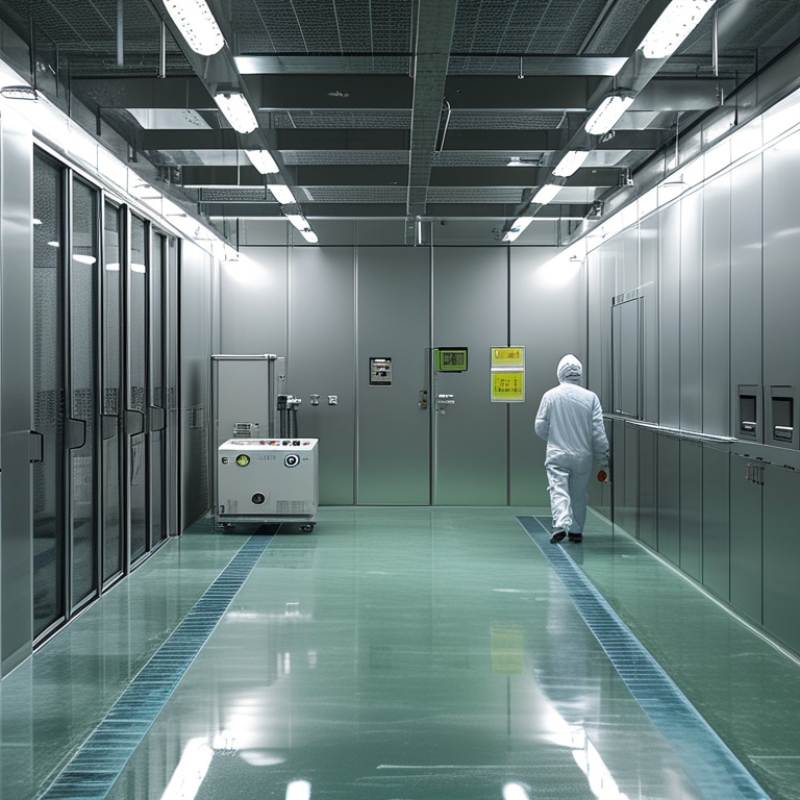
Cleanroom air quality begins with defined control objectives, not simply a high air-change rate. ISO 14644-1 classifies airborne particle concentration under specified test conditions. ISO 14644-2 supports ongoing monitoring and performance verification. These standards should guide the design, but risk assessment must determine the actual controls.
The main objective is stable contamination control. Measure particles at critical work zones, transfer points, and return-air locations. Track temperature, humidity, room pressure, and airflow direction. A small pressure loss near a door can pull unfiltered air inward. Door interlocks, sealed surfaces, and properly maintained filters reduce this risk. Operators also need clear gowning procedures and practical movement rules.
Keep records that show trends, not isolated results. A particle counter may show compliance during certification, while contamination rises during busy production hours. That gap deserves investigation. Review alarm limits, sampling locations, cleaning methods, and maintenance activities. Do not treat every deviation as equipment failure. Human movement may be the hidden source. Still, monitoring plans can be imperfect. Sampling too rarely may create false confidence. Controls should be reviewed after process changes, filter work, unusual traffic, or repeated microbial findings. Clean air is maintained through disciplined behavior, verified equipment, and evidence-based decisions.
How to Maintain Air Quality in Cleanroom Facilities?
Identifying and Managing Common Sources of Air Contamination
Personnel are often the greatest contamination source in a cleanroom. Skin flakes, fibers, cosmetics, and careless movement can quickly affect particle levels. Gowning procedures should match the room classification and process risk. Training must include practical demonstrations, not only written instructions. Slow movements help reduce turbulence. Airflow tells the story.
Materials can introduce particles, fibers, and chemical residues before production begins. Inspect packaging outside the controlled area, then transfer items through approved cleaning and pass-through procedures. Keep cardboard, paper, and unnecessary containers away from critical zones. Cleaning tools also require control. A poorly maintained mop can spread contamination instead of removing it. This mistake is easy to miss.
Ventilation failures create less visible risks. Check pressure differentials, filter integrity, airflow patterns, temperature, and humidity at defined intervals. A blocked return grille or damaged seal may disturb protection between rooms. ISO 14644-based monitoring can support classification and trend analysis, but measurements alone are not enough. Investigate unusual results at once. Small leaks matter. Equipment, lubricants, and maintenance work may release particles or vapors, so schedule servicing under controlled conditions. Records should identify the source, response, responsible person, and verification result. Perfect control is unrealistic. Weak assumptions still deserve review.
ISO 14644-1 classifies cleanrooms by the maximum permitted concentration of airborne particles at least 0.5 µm in size. As the ISO class number increases, the allowable particle concentration rises. Effective air-quality management should prioritize personnel movement, gowning, material transfer, equipment shedding, cleaning practices, and HVAC filtration and airflow control.
Reference basis: ISO 14644-1 particle concentration limits for particles ≥0.5 µm per cubic metre. These limits address airborne particle classification and do not represent microbial or chemical contamination limits.
Cleanroom air quality begins with a filtration strategy matched to the process risk. High-efficiency filters should remove airborne particles before air reaches critical work zones. Filter efficiency alone is not enough. Seal quality, housing design, and installation accuracy also determine performance.
Airflow must move contaminants away from exposed products and personnel. Many facilities use unidirectional flow near sensitive operations, while mixed airflow may suit lower-risk areas. A controlled pressure cascade helps prevent dirty air from entering cleaner rooms. Keep supply diffusers clear, and check return grilles for dust buildup. Small obstructions can create large turbulence.
Measure what the room is actually doing.
Routine testing should include particle counts, pressure differences, temperature, humidity, and airflow velocity. Smoke studies can reveal dead zones that sensors miss. Filter integrity testing should follow approved procedures and documented acceptance limits. Maintenance teams should record every inspection, replacement, and deviation.
No design is perfect. Door openings, trolley movement, and poorly placed equipment can weaken an otherwise sound system. This is where practical observation matters. Operators often notice unstable airflow before a dashboard does. Review the layout after process changes, not only during commissioning. A previous design may have worked well, but new equipment can quietly alter the room’s airflow pattern.
Air quality in a cleanroom depends on disciplined behavior, not filtration alone. Cleaning procedures should match the room’s classification, process risks, and contamination sources. Use dedicated tools for each zone, and never move equipment from a lower-grade area without proper control. Clean from higher surfaces downward, using overlapping strokes and approved disinfectants. Respect the required contact time. Otherwise, the surface may look clean while microorganisms remain active. Pay attention to door handles, corners, air grilles, and the spaces beneath worktables. These details are easy to miss.
Gowning procedures need clear steps and practical supervision. Personnel should remove jewelry, follow hand hygiene requirements, and put on garments in the correct sequence. Gloves must remain above the gown cuffs and should be changed after touching non-clean surfaces. Keep movements slow. Sudden motion can disturb settled particles. Training should include demonstrations, written procedures, and periodic observation inside the changing area. Access should be limited to trained personnel, while door opening, traffic flow, and occupancy levels remain controlled. A simple entry log can reveal repeated problems.
Monitoring should connect cleaning records with particle counts, microbial results, and investigation reports. Qualified personnel should review these records rather than treating them as paperwork. A common weakness is assuming that a passed test proves every procedure works. It does not. Cleaning frequency may need adjustment after maintenance, unusual spills, or increased staffing. Teams should examine recurring deviations honestly, even when the cause seems minor. A missed glove change or poorly closed door can become a meaningful contamination risk.
Maintaining cleanroom air quality requires more than checking particle counts at scheduled intervals. Operators should monitor airborne particles, temperature, humidity, and room pressure continuously or at defined frequencies. These readings reveal small changes before they become serious contamination risks. A sudden pressure drop may indicate a door problem, filter issue, or ventilation imbalance. Record the event, not just the final result.
Testing should follow a documented plan aligned with applicable cleanroom standards and facility risk. Particle counters require calibration, while microbial sampling needs controlled handling and clear acceptance limits. Periodic filter integrity tests can confirm whether the air system is performing as expected. Trend reports are especially valuable. One failed reading needs investigation, but repeated borderline results deserve attention too. We sometimes focus too heavily on pass-or-fail outcomes.
Tips: Keep sensors away from direct airflow. Compare readings from busy and quiet periods. Review alarm history weekly. Train staff to report unusual odors, condensation, or pressure changes. Clean sampling equipment carefully. Small details matter.
Continuous improvement depends on practical responses. When results shift, inspect cleaning methods, gowning behavior, airflow patterns, and maintenance records. Use root-cause analysis instead of immediately increasing cleaning frequency. After corrective action, repeat the relevant test and document the evidence. An effective program also reviews its own limits. Are alert levels sensitive enough? Are samples taken where contamination risk is highest? Honest review can expose weak assumptions before they affect production.
The main objective is stable contamination control, not simply a high air-change rate. Measure particles near work zones, transfer points, and return-air locations.
Track particles, temperature, humidity, room pressure, and airflow direction. A small pressure loss near a door can pull unfiltered air inside. Small leaks matter.
Testing may occur during quiet conditions, while contamination rises during busy production hours. Review trends, alarms, sampling locations, cleaning records, and maintenance activities.
Personnel may release skin flakes, fibers, cosmetics, and particles through careless movement. Materials, packaging, lubricants, damaged seals, and maintenance work can also introduce contamination.
Follow the gowning sequence, remove jewelry, and complete hand hygiene. Keep gloves above gown cuffs and change them after touching non-clean surfaces. Move slowly.
Use dedicated tools for each zone and clean from higher surfaces downward. Use overlapping strokes and respect disinfectant contact time. Check corners, handles, air grilles, and spaces beneath worktables.
Inspect packaging outside the controlled area. Use approved cleaning and transfer procedures before entry. Keep cardboard, paper, and unnecessary containers away from critical zones.
Investigate promptly instead of blaming equipment automatically. Review human movement, door openings, filter work, cleaning methods, and sampling frequency. Our assumptions may still be weak.
Connect particle counts, microbial results, cleaning records, and investigation reports. Each record should identify the source, response, responsible person, and verification result. Paperwork alone proves little.
Maintaining cleanroom air quality requires a structured approach that combines clear standards, contamination control, and continuous verification. The first step is to define air cleanliness targets based on the facility’s activities, then identify possible contamination sources such as particles, microorganisms, chemicals, equipment, materials, and human movement. Effective filtration and balanced airflow should be designed to support proper pressure relationships, directional air movement, and sufficient air changes while avoiding turbulence and dead zones.
To understand how to maintain air quality in clean room facilities, organizations should also enforce consistent cleaning, gowning, hand hygiene, and personnel entry procedures. Materials and tools must be transferred carefully, and unnecessary movement should be minimized. Regular monitoring of airborne particles, temperature, humidity, pressure, and microbial conditions helps confirm that controls remain effective. Routine testing, documented inspections, trend analysis, staff training, and corrective actions create a continuous improvement cycle that protects product quality and supports reliable cleanroom performance.

Goldy Homes