Top Reasons Why Clean Rooms Are Important in Manufacturing

Time:2026-09-18 Author:Mason
0%

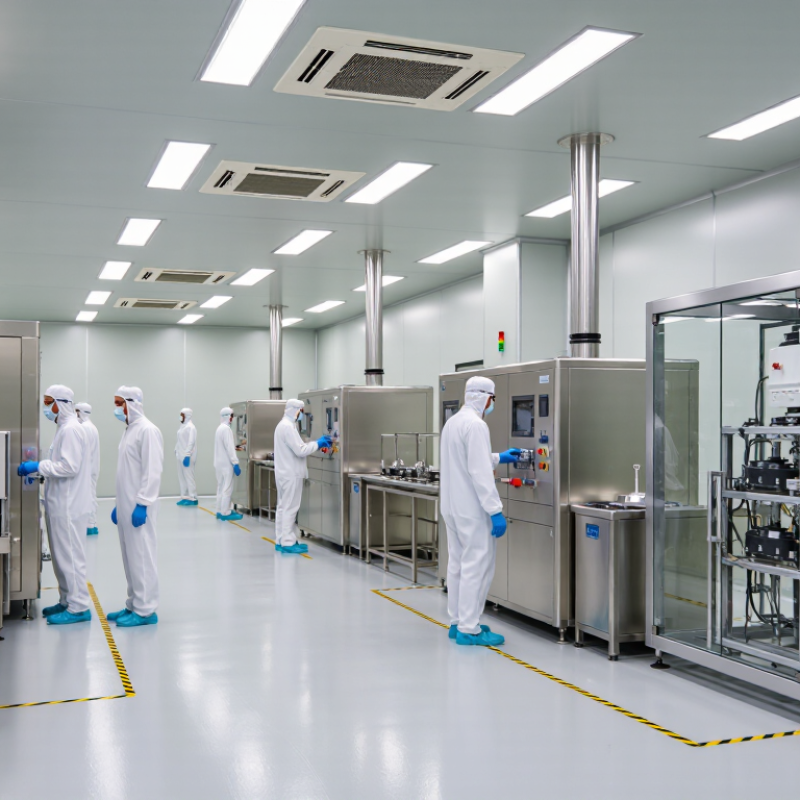
Manufacturing quality can change because of what the eye cannot see. Airborne particles, microbes, fibers, and skin flakes may settle on exposed materials or enter sensitive processes. This risk is especially serious in pharmaceuticals, medical devices, electronics, aerospace components, and advanced food production. So, why are clean rooms important in manufacturing? They provide controlled conditions where air cleanliness, pressure, temperature, humidity, and personnel movement can be monitored consistently.

ISO 14644-1:2015 classifies cleanroom performance through airborne particle concentrations. For example, an ISO Class 5 environment permits no more than 3,520 particles measuring 0.5 micrometers or larger per cubic meter of air. That limit gives manufacturers a measurable control point. It also shows how demanding contamination control can be. A clean room is not simply a bright room with filters.

Regulatory guidance supports this disciplined approach. The European Commission’s EU GMP Annex 1, revised in 2022, requires risk-based contamination control for sterile pharmaceutical manufacturing. It emphasizes cleanroom design, environmental monitoring, barrier technologies, and trained operators. The World Health Organization’s Technical Report Series also links sterile production quality with controlled environments and validated processes. These sources establish a professional foundation for cleanroom planning.

However, cleanrooms are not a complete solution. Poor gowning, open doors, incorrect cleaning, or rushed maintenance can defeat expensive systems. I have seen this principle reflected in many manufacturing audits: human behavior often becomes the weakest control. Effective facilities therefore combine engineering, procedures, training, data review, and continuous improvement. The strongest cleanroom protects the product while encouraging people to question their habits.
Top Reasons Why Clean Rooms Are Important in Manufacturing

What Clean Rooms Are and How They Control Manufacturing Environments

Top Reasons Why Clean Rooms Are Important in Manufacturing

A clean room is a controlled manufacturing space designed to limit airborne particles, microbes, temperature changes, and humidity shifts. It is not simply a room that looks clean. Its performance is measured against defined cleanliness levels, often using ISO 14644 guidelines. Air enters through high-efficiency filters, moves in planned patterns, and leaves through return systems. This process reduces contamination around sensitive products and equipment.

Control begins with the air. Pressure differences help prevent unfiltered air from entering when doors open. Temperature and humidity systems protect materials from moisture, static electricity, or dimensional changes. Operators wear dedicated garments, gloves, masks, and shoe coverings. They also follow controlled entry procedures. Small details matter. A loose sleeve can release particles. A rushed movement can disturb airflow.

In daily manufacturing, monitoring devices track particles, pressure, temperature, and humidity. Workers record results and investigate unusual readings before production continues. Cleaning schedules also cover floors, walls, work surfaces, and tools. However, a clean room is not perfectly clean. That assumption can create risk. Human activity remains a major contamination source, even with careful training. Procedures may be technically correct but poorly followed during busy shifts. Regular audits, maintenance, and practical retraining help reveal these weak points. A reliable clean room depends on both engineered controls and disciplined behavior.

Top Reasons Why Clean Rooms Are Important in Manufacturing

How Clean Rooms Control Manufacturing Environments

Clean rooms reduce airborne contamination by controlling particles, temperature, humidity, air pressure, and airflow. This chart shows the maximum permitted concentration of particles measuring at least 0.5 micrometers per cubic meter under ISO 14644-1 cleanroom classifications. Lower particle levels help protect sensitive products, improve process consistency, and reduce contamination-related defects.

How Clean Rooms Prevent Product Contamination and Defects

Clean rooms are important because contamination often begins invisibly. A fiber, skin flake, or airborne particle can settle on a surface before inspection. The resulting defect may appear later during assembly, testing, or use. Clean rooms reduce this risk by controlling airborne particles, temperature, humidity, pressure, and personnel movement.

The numbers are strict. ISO 14644-1:2015 permits no more than 3,520 particles measuring 0.5 micrometers or larger per cubic meter in an ISO Class 5 room. An ISO Class 7 room allows 352,000 particles at the same size. This difference shows why filtration and controlled airflow matter. EU GMP Annex 1, revised in 2022, also limits Grade A areas to 3,520 particles per cubic meter at 0.5 micrometers. These limits support cleaner filling, coating, electronics, and medical production environments.

Small particles matter.

In practice, contamination control depends on people as much as equipment. Operators can introduce particles through clothing, movement, or poor glove technique. A door left open can disturb pressure balance within seconds. Clean rooms also cannot repair weak cleaning procedures or careless material transfer. That is the uncomfortable part. Facilities may pass a particle test while still producing defects. Continuous monitoring, documented training, surface sampling, and root-cause reviews provide stronger evidence. ISO 14644-2:2015 recommends ongoing monitoring based on risk, not occasional testing alone.

The Role of Clean Rooms in Protecting Workers and Sensitive Materials

In manufacturing, a clean room is more than a bright, sealed workspace. It controls airborne particles, temperature, humidity, and pressure around workers and sensitive materials. A technician may notice dust only after it settles on a lens, coating, or sterile surface. That delay matters. Clean air also reduces workers’ exposure to process residues, although it does not replace proper ventilation or protective equipment. Safety depends on the whole system, not walls alone. It is easy to forget this.

Workers rely on gowning procedures, airlocks, and clear movement rules. A loose sleeve, hurried entry, or poorly fitted mask can introduce particles within minutes. Routine particle counts and pressure checks reveal problems before production losses become obvious. Supervisors should review these records, investigate unusual readings, and refresh training with real examples. Experience shows that small habits often protect materials better than expensive equipment. Still, procedures can become mechanical. Staff may follow steps without understanding them. Small gaps matter.

For sensitive materials, stable humidity can prevent static discharge, warping, or unwanted reactions. Filtered air protects exposed components during assembly, inspection, and packaging. Separate zones can also limit cross-contamination between processes. However, clean rooms require honest maintenance. Filters age, doors fail to close, and monitoring sensors drift. A room may look spotless while its controls weaken. Regular qualification, calibrated instruments, documented cleaning, and worker feedback provide stronger assurance. The uncomfortable question is whether every recorded check reflects reality. Sometimes it does not.

Industries and Manufacturing Processes That Require Clean Rooms

Clean rooms are essential in industries where particles, microbes, or humidity can damage products. Semiconductor manufacturing is a clear example. During wafer processing, one fiber can affect circuit performance. Operators use controlled clothing, filtered air, and strict movement procedures. Small details matter.

Pharmaceutical production depends on clean rooms for sterile filling, compounding, and injectable medicine assembly. Air pressure, temperature, and surface sanitation require constant monitoring. Medical device manufacturers also use controlled spaces when producing implants, catheters, and surgical components. A loose particle may create a safety risk. Biotech laboratories need similar protection during cell culture and diagnostic testing. Contamination can change results quickly.

Other applications include aerospace optics, precision sensors, lithium battery assembly, and advanced food processing. Optical lenses need dust-free handling. Battery plants control moisture because water can affect sensitive materials. High-care food areas reduce microbial exposure during open processing. Yet cleanroom design is not automatically perfect. A costly room may still perform poorly if workers open doors too often or ignore gowning steps. I have seen operational habits create more risk than visible dust. Regular particle testing, surface sampling, airflow checks, and staff training reveal these weaknesses. Cleanliness also depends on the process itself. A packaging line may need different controls from a sterile filling area. Overengineering wastes energy, while underestimating contamination threatens quality. Good planning connects room classification, equipment layout, worker behavior, and product risk.

How Clean Room Standards Support Quality, Safety, and Compliance

Clean rooms are important because controlled air directly supports product quality, worker safety, and regulatory compliance. ISO 14644-1 classifies rooms by airborne particle concentration, while manufacturing rules may add requirements for hygiene, testing, and documentation. These standards turn cleanliness into measurable conditions rather than personal judgment. A trained technician can verify pressure differences, temperature, humidity, and particle counts during routine monitoring.

In practice, clean room controls protect exposed materials from dust, microbes, and cross-contamination. HEPA-filtered air, sealed surfaces, controlled entry, and correct gowning procedures work together. Records also matter. Inspectors often need to trace calibration results, cleaning schedules, environmental readings, and corrective actions. A room may appear spotless but still fail its required particle limit. That gap is easy to miss. Standards cannot replace careful human observation.

Tips: Keep doors closed, move slowly, and follow the approved gowning sequence. Check alarms before production begins. Review trends, not only single readings. Staff should report unusual odors, damaged seals, or repeated pressure changes immediately. Training is valuable, but it is not perfect. People forget steps during busy shifts, and procedures may become outdated. Regular audits, practical retraining, and honest deviation reports help reveal those weaknesses before they affect product quality or compliance.

FAQS

What does a clean room control?

It controls airborne particles, temperature, humidity, and pressure. A bright room is not automatically safe.

How do clean rooms protect workers?

Controlled airflow can reduce exposure to process residues. Workers still need ventilation, protective equipment, and correct training.

Why are gowning and airlocks important?

They limit particles carried by clothing, skin, and movement. A loose sleeve can contaminate a surface within minutes.

Which industries commonly require clean rooms?

Semiconductor, pharmaceutical, medical device, biotechnology, aerospace optics, battery, and advanced food processing industries use them.

How can humidity affect sensitive materials?

Unstable humidity may cause static discharge, warping, or unwanted reactions. Moisture can also damage delicate battery materials.

What problems can routine monitoring reveal?

Particle counts, pressure checks, surface samples, and airflow tests can expose hidden weaknesses. A spotless room can still fail.

How should clean room maintenance be managed?

Filters, doors, sensors, and cleaning records need regular review. Calibration and qualification should support, not replace, honest inspection.

Can expensive equipment guarantee clean room performance?

No. Frequent door opening or rushed gowning can create more risk than visible dust. The design may be excellent, but habits still matter.

Why should clean room rules be explained, not merely followed?

Staff may repeat steps mechanically without understanding contamination risks. Real examples make small actions easier to remember.

How should a clean room match its production process?

A packaging line may need different controls from sterile filling. Overengineering wastes energy, while weak controls threaten product quality.

Conclusion

Clean rooms are specially controlled manufacturing environments designed to limit airborne particles, microbes, temperature changes, humidity, and other sources of contamination. They use filtered air, controlled airflow, protective clothing, strict cleaning procedures, and carefully managed entry systems to maintain consistent conditions. Understanding why are clean rooms important in manufacturing begins with their ability to protect products from dust, microorganisms, chemical residues, and other contaminants that can cause defects, reduce performance, or shorten product life.

Clean rooms also help protect workers and sensitive materials by controlling exposure to hazardous particles and unstable environmental conditions. They are essential in industries such as pharmaceuticals, medical devices, electronics, aerospace, food processing, and advanced materials, where even small contaminants can create serious quality problems. Clean room standards provide measurable requirements for air cleanliness, monitoring, sanitation, and operational procedures. By following these standards, manufacturers can improve product consistency, support worker safety, reduce waste, and demonstrate compliance with applicable quality and safety expectations.

Mason

Mason

Mason is a seasoned marketing professional with a deep expertise in the company's offerings and a passion for driving brand awareness. With a strong background in digital marketing strategies, he has an innate ability to connect with diverse audiences and effectively communicate product benefits.......