Enclosed environments include cleanrooms, laboratories, hospitals, pharmaceutical plants, and spacecraft cabins. Their controlled appearance can be misleading. A sealed room is not automatically a clean room. People, airflow, packaging, moisture, and maintenance activities can all introduce particles or microorganisms. In a quiet laboratory, one uncovered surface may become a contamination source within hours.
The World Health Organization reports that approximately 7% of acute-care patients in high-income countries acquire at least one healthcare-associated infection. This figure rises to about 15% in low- and middle-income countries. The data show why contamination control affects safety, production reliability, and public confidence. ISO 14644-1 also emphasizes that cleanroom classification depends on measured airborne particle concentrations, not visual cleanliness. That distinction is often underestimated.
Understanding how to control contamination in enclosed environments requires more than stronger disinfectants. It requires risk assessment, personnel training, pressure control, suitable filtration, validated cleaning, and continuous environmental monitoring. Contamination-control specialist Tim Sandle describes the discipline as “a continuous process,” rather than a one-time cleaning task. The principle is practical. A gowning error, damaged filter seal, or poorly placed sensor can undermine an otherwise advanced facility.
Yet no monitoring program is perfect. Sampling captures limited locations and limited moments. Data can also create false confidence when teams ignore human behavior. Effective control therefore combines engineering, microbiology, documented procedures, and experienced judgment. The strongest systems detect weak signals early, investigate deviations honestly, and improve before contamination becomes a visible failure.
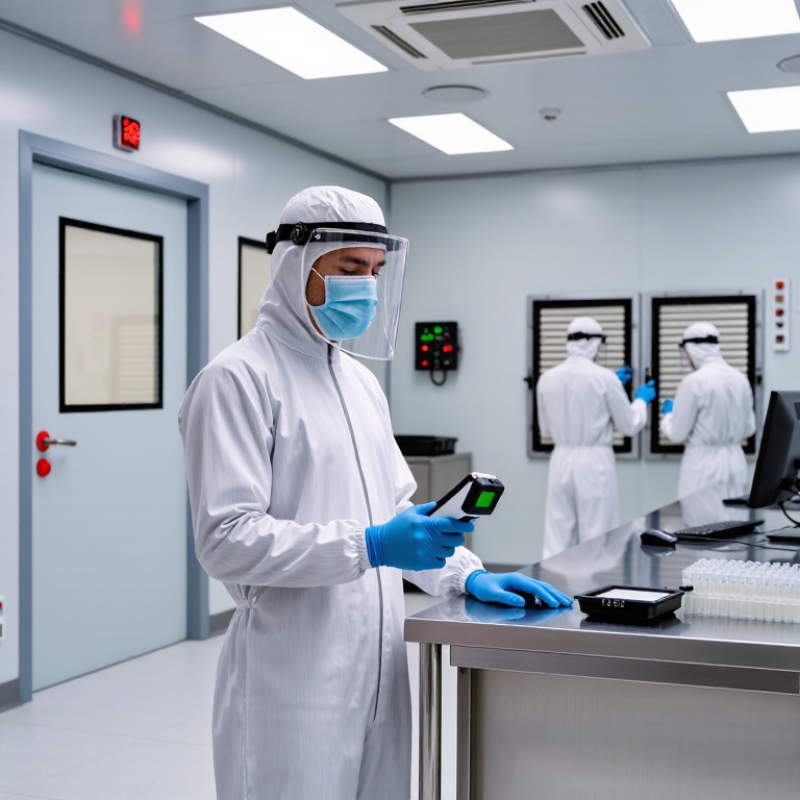
In an enclosed environment, contamination means unwanted material has entered the air, surfaces, water, or equipment. It may be visible, such as dust on a workbench. More often, it is invisible. Fine particles, microorganisms, chemical vapors, and skin flakes can move through small spaces. A closed room is not automatically a clean room.
During practical environmental assessments, contamination often comes from ordinary activities. Opening a door can disturb settled dust. People can carry particles on clothing, gloves, or footwear. Poorly maintained ventilation may spread pollutants between areas. Moisture adds another concern because it can support microbial growth on damp materials. A small leak near stored supplies may create a wider problem than expected.
Contamination also means loss of control. One sample, surface, or process can affect another through careless movement. This is called cross-contamination. Its effects range from inaccurate test results to equipment damage and health concerns. Control measures should match the contaminant and its pathway. Airflow checks, cleaning records, surface testing, and controlled access provide useful evidence. Visual inspection alone is not enough.
The difficult part is uncertainty. A room may look spotless and still contain harmful particles. I have seen teams focus on visible dirt while overlooking airflow and moisture. That approach needs reconsideration. Reliable control requires documented procedures, trained personnel, suitable protective measures, and regular verification. Not every enclosed environment needs the same standard. However, every environment needs a clear understanding of what could enter, move, remain, and cause harm.
Contamination means unwanted material has entered the air, surfaces, water, or equipment. It may include dust, microorganisms, vapors, or skin flakes. Some contamination is invisible.
No. A closed room can still contain fine particles and chemical vapors. Doors, clothing, ventilation, and maintenance activities can introduce contaminants.
People carry particles on shoes, clothing, gloves, bags, skin, and hair. Movement can disturb dust from floors and shelves. Coughing and cleaning may also release suspended particles.
Supply vents can carry particles toward desks, shelves, and equipment. Poor exhaust placement may pull contaminated air through occupied areas. Temperature differences can create unseen currents near doors and ceilings.
Cross-contamination occurs when material moves from one sample, surface, or process to another. Careless movement can transfer particles between work areas. This may cause inaccurate results or equipment damage.
Moisture can support microbial growth on damp materials. A small leak near stored supplies may affect a larger area. Wet surfaces deserve prompt inspection.
A room may look spotless while its air or return grille contains particles. Dark dust behind a grille may reveal an overlooked airflow problem. Appearance can mislead us.
Useful controls include filtration checks, airflow testing, pressure monitoring, surface testing, and controlled access. Cleaning records also provide valuable evidence. No single control removes every risk.
Controls need regular verification and review after maintenance, leaks, unusual odors, or process changes. Door openings and personnel movement also deserve attention. Small failures can spread farther than expected.
Contamination in enclosed environments refers to the presence and buildup of unwanted biological, chemical, or particulate substances in indoor spaces. These contaminants can enter through people, ventilation systems, materials, water, equipment, or outside air, then spread through movement, airflow, moisture, and frequently touched surfaces. Without proper control, they may contribute to unpleasant odors, poor air quality, respiratory irritation, allergic reactions, equipment damage, and broader health and safety concerns.
Understanding how to control contamination in enclosed environments requires a combination of prevention, detection, and continuous management. Effective practices include improving ventilation, controlling humidity, maintaining cleanliness, separating potentially contaminated areas, using suitable protective procedures, and inspecting high-risk locations regularly. Air and surface testing can help identify hidden problems, while routine monitoring reveals changes before they become serious. Consistent records, timely corrective action, and periodic reviews are essential for preventing recurring contamination and maintaining a safer, healthier indoor environment.

 Goldy Homes